Small Kitchen Renovation Ideas for Tacoma Homes
Most small Tacoma kitchens aren't stuck — they just need the right changes. Here are the ideas that actually work in South Sound ranch homes and ramblers, with real cost ranges.

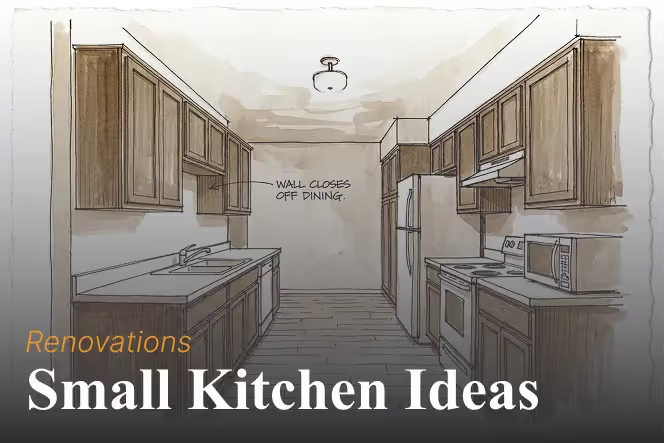
Most homeowners with small kitchens have already made peace with them.
They've decided the kitchen is what it is. It's tight, it's disconnected from the rest of the house, there's not enough counterspace, and never quite enough light. They've arranged the appliances as best they can, bought the over-the-door organizers, and moved on.
What they haven't done is talked to a contractor who has actually worked in these kitchens.
Because in this part of Washington, the ramblers and ranches and split-levels built across the South Sound between the 1950s and the 1980s share something that makes them more fixable than they look.
They weren't designed badly. They were designed for a different way of living.
And the changes that matter most don't require expanding the footprint, adding square footage, or spending like you're building new.
Here's what actually moves the needle.
What These Kitchens Usually Look Like Before
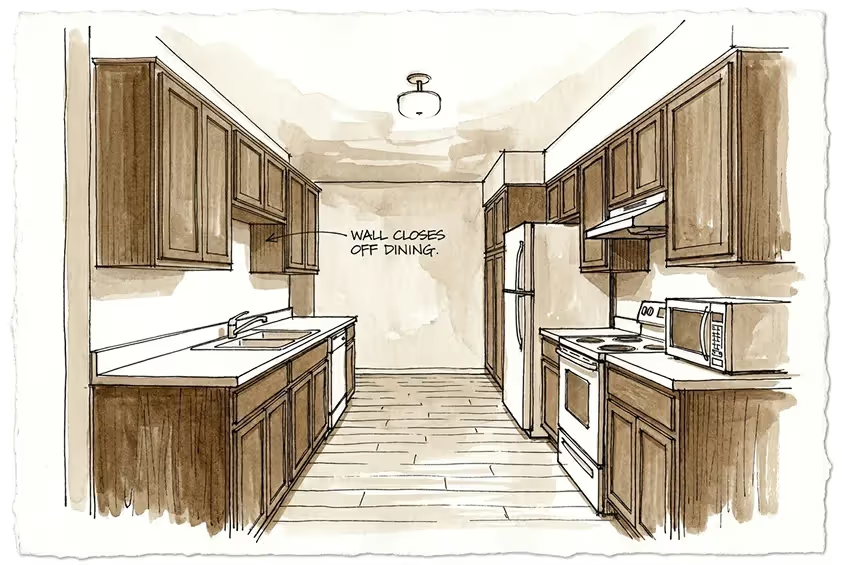
Walk into most small Tacoma kitchens and you'll find roughly the same setup:
- Two runs of cabinets in a galley or tight L-shape, somewhere between 8 and 12 feet long..
- A wall separating the kitchen from the dining room or living area, a partition that made sense in 1967 when kitchens were work rooms, not gathering spaces.
- Oak or builder-grade cabinets that absorbed the light instead of reflecting it..
- One overhead fixture.
And not much else.
The kitchen is doable. Technically, there's nothing broken, but it feels boxed in, a little dim, and smaller than it probably needs to be.
And so that's the before.
it's worth sitting with for a moment, because understanding what's actually making it feel that way is what makes the 'after' possible.
Idea 1: Open the Wall Between the Kitchen and Dining Room
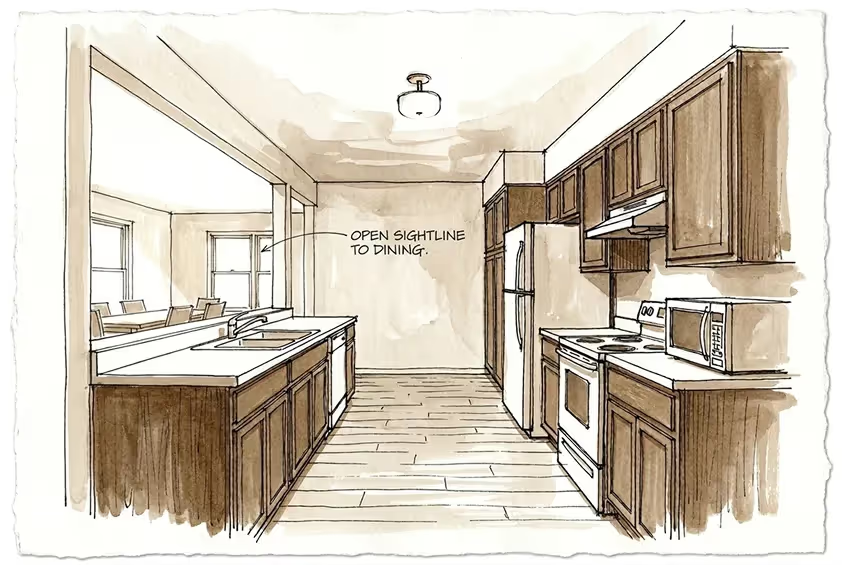
This is the highest-impact change you can make in a small Tacoma kitchen, and it isn't particularly close.
When we open a wall between a kitchen and dining room in a South Sound rambler, the result is huge. Now the kitchen stops feeling like a separate room and it borrows light from windows it couldn't reach before. It feels twice as large because the eye can travel further into the space. The homeowner who was eating on the couch because the kitchen felt like a utility closet suddenly has a room they want to be in.
We documented a similar kind of transformation in a recent Bonney Lake kitchen remodel. The before and after are worth seeing.
To be clear, not every wall can go.
In homes built during this era, some kitchen walls carry structural loads, and removing those requires a beam, posts, and permits pulled through the City of Tacoma or Pierce County. If you're not sure what your project triggers, here's a full breakdown of when Tacoma kitchen remodels require permits. But a significant number of these walls are partition walls: drywall over studs, carrying nothing. Those come down for a fraction of what most people expect.
A contractor with enough South Sound experience can look at a wall and tell you within minutes whether it's structural. That's a question worth asking early, before the scope of the project gets set in stone.
If you're still evaluating contractors, these are the 10 questions worth asking before you hire anyone for a Tacoma kitchen remodel.
Cost range: $2,000 to $8,000 for a non-load-bearing wall. $10,000 to $20,000 or more when structural work is required.
Idea 2: Add a Peninsula in Your Kitchen
A galley kitchen runs two parallel rows of cabinets with a corridor between them.
It's not a bad layout. Restaurants use it for a reason. The problem is that most galley kitchens in older Tacoma homes weren't planned with much intention, and the result is a corridor that's either too narrow to move comfortably or a sequence of appliances that creates constant backtracking.
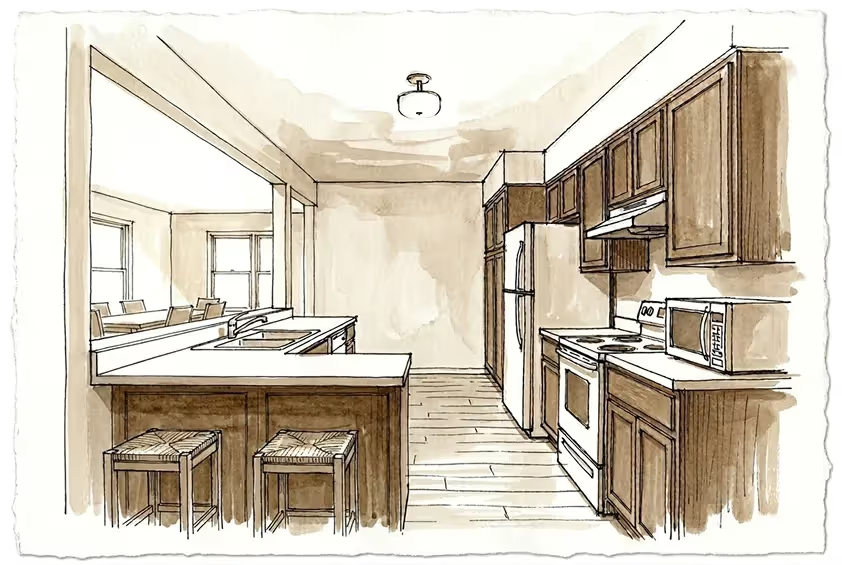
Adding a peninsula instead of trying to fit a full island can make a huge difference. A true island needs 36 to 42 inches of clearance on every side. Most small kitchens don't have it. A peninsula, attached at one end to a wall or existing cabinet run, delivers the same prep surface and seating without blocking the corridor. When we open a wall to the dining room at the same time, the peninsula often becomes the natural divider between the two spaces, serving both rooms at once.
Idea 3: Lighten the Kitchen Cabinet Color and Remove Some
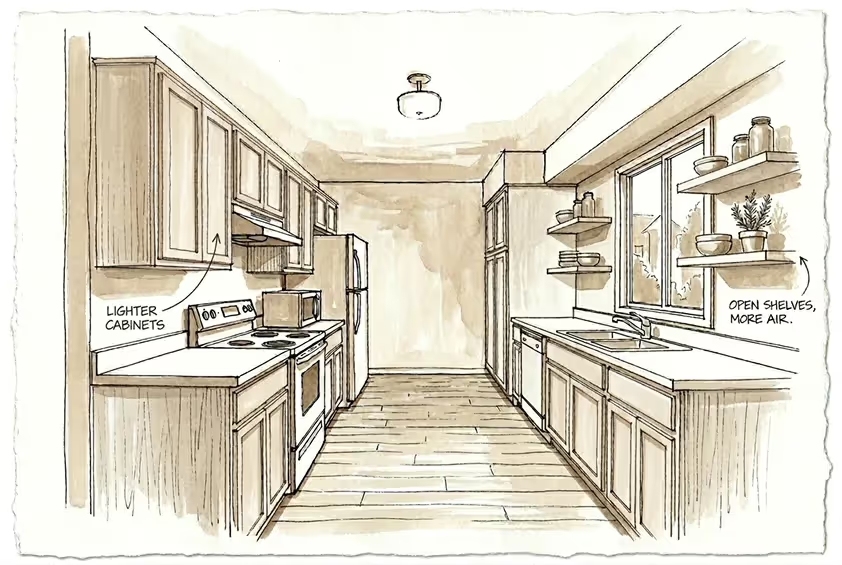
Upper cabinets in a small kitchen do two things. They store your stuff, and they make the room feel lower and more closed in. Every homeowner has to answer one question honestly: how much storage do you actually need versus how much air do you want in the room?
The approach that works for most households is to pull the uppers off one wall, usually the shorter run or the wall with the window, and put up floating shelves instead. Keep the full upper cabinets on the longer run where the storage actually earns its place. The side with the shelves opens up and feels considerably larger, and you haven't lost the storage you depend on.
Removing uppers entirely is possible, but it takes a real plan for where everything goes. If the answer is "we'll figure it out," that's usually how the counters end up buried under small appliances and the kitchen feels worse, not better.
While the cabinets are getting rethought, this is also the moment to deal with their color, and you can usually do it without replacing a single box.
When the layout is working and the boxes are structurally solid, full replacement is the most expensive way to fix what is really a cosmetic problem. Refinishing keeps the existing boxes, strips and repaints the exterior, and swaps the hardware.
Refacing goes a step further and replaces the door fronts and drawer faces while keeping the boxes and their mounting points. Either way you get most of the visual impact of new cabinets at 30 to 50 percent of the cost. The catch is that this only works when the boxes are in good shape and the layout already does what you need. If the layout has to change, you're into full replacement no matter how solid the boxes are.
Idea 4: Upgrade Your Kitchen Lighting
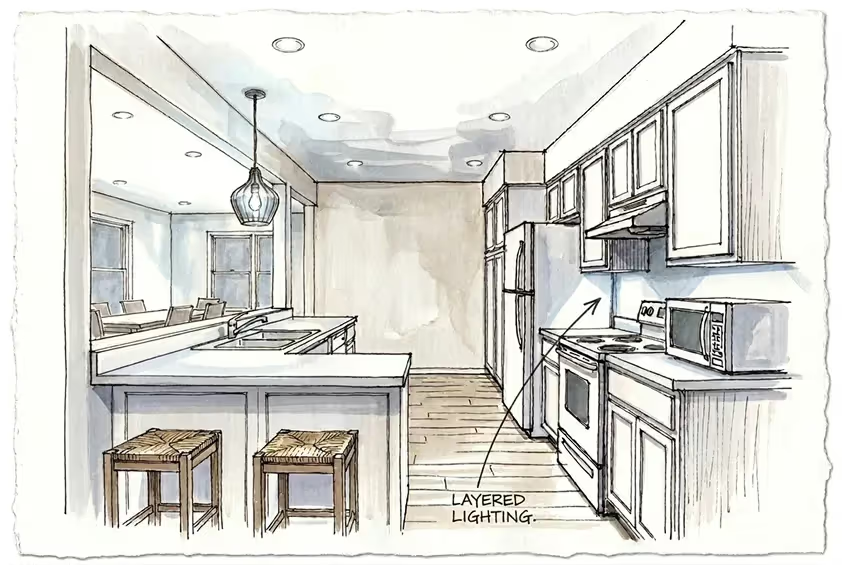
A small kitchen that gets its lighting right feels like a completely different room from the same kitchen lit by a single overhead fixture casting shadows across every counter.
The combination that works: recessed lighting in the ceiling to eliminate the flat, dim effect of one central light, under-cabinet LED strips that illuminate the work surface directly, and a statement pendant over a peninsula or island to add visual height and warmth. Those three layers together change a kitchen more than most people expect before they've seen it done.
The investment is modest compared to cabinets or countertops. And in a north-facing kitchen, or one with a small single window, getting the lighting right can matter more than almost anything else on the list.
We've worked with homeowners in Tacoma who came to us ready to replace their cabinets. After walking through the lighting options, a few of them decided to do lighting first and sit with the result. One of them never called back about the cabinets. The lighting alone changed the kitchen enough that nothing else felt urgent.
Idea 5: New Kitchen Countertops
Countertops change the feel of a kitchen faster than almost any other single element. And in a small kitchen, where the total surface area is modest, the material cost stays manageable even at the higher end of the market.
The options that make the most sense in South Sound kitchens:
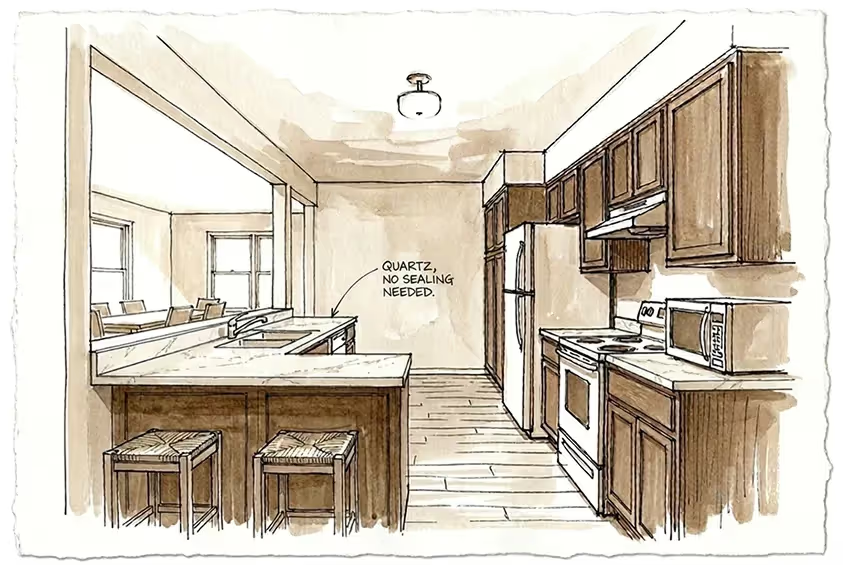
Quartz holds up well in a working kitchen. It doesn't require sealing, resists staining from the things that actually get spilled in daily use, and comes in finishes that pair with both painted cabinets and wood tones. Installed cost runs $50 to $120 per square foot depending on the material and edge profile.
Butcher block adds warmth and works well when the rest of the kitchen's finishes are light or neutral. It requires more attention than quartz: oiling periodically, keeping it dry at the seams. But in a small kitchen that maintenance stays minimal. Expect $40 to $70 per square foot installed.
Modern laminate is more capable than most people give it credit for. The higher-end options available now look significantly better than what was on the market a decade ago. At $15 to $35 per square foot installed, it's a solid entry point for a cosmetic refresh on a tighter budget.
Idea 6: Refinish or Reface the Kitchen Cabinets
As mentioned, when the layout is working and the cabinet boxes are structurally solid, full replacement is often the most expensive way to solve what is fundamentally a cosmetic problem.
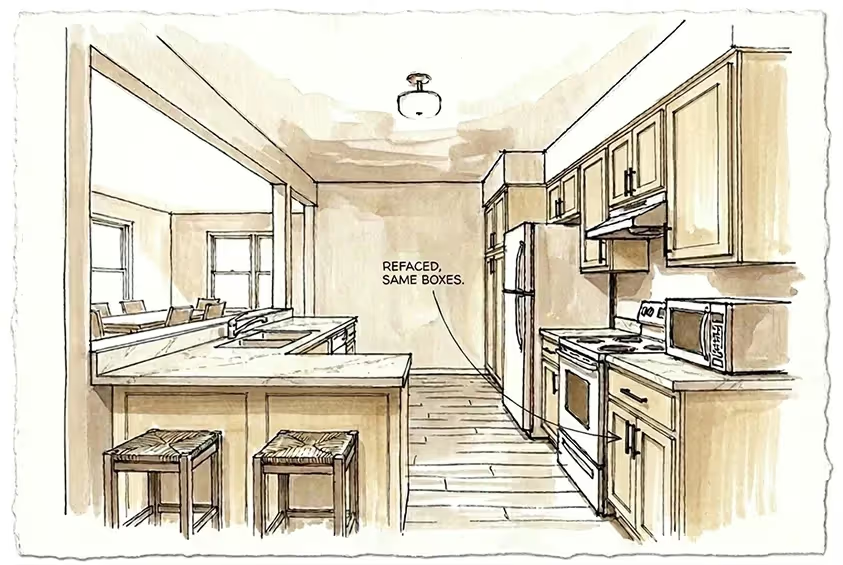
Refinishing keeps the existing boxes, strips and repaints the exterior, and replaces the hardware. Refacing goes a step further, swapping the door fronts and drawer faces while keeping the boxes and their existing mounting points. Both approaches deliver most of the visual impact of new cabinets at 30 to 50 percent of the cost.
The limitation is real: this only works when the boxes are in good condition and the layout is already doing what you need it to do. If the layout needs to change, you're into full replacement territory regardless of the condition of the existing cabinets.
What This Actually Costs in Tacoma
Pacific Northwest labor and material costs run above national averages, and Tacoma is no exception. Here's what the ranges look like in this market, without the vagueness that makes most cost guides useless:
A cosmetic refresh covering new cabinet fronts, hardware, countertops, and updated lighting typically comes in between $8,000 and $20,000, depending on material choices and how much counter surface is being replaced.
A mid-range remodel with new cabinets, countertops, appliances, and lighting, but without layout changes, typically lands between $30,000 and $55,000.
A full gut-and-rebuild that includes opening a wall, relocating plumbing, and replacing everything runs $55,000 to $100,000 and up, and typically takes 8 to 14 weeks from demo to punch list.
One thing to factor in on any gut-level project in an older Tacoma home: discovery costs. Cast iron drain lines, outdated electrical panels, moisture in the subfloor. These are common in this housing stock, and they add cost when they surface. A contractor who has worked enough South Sound homes factors this into the conversation upfront, not as a surprise at week three. For a full breakdown of how Tacoma kitchen remodel budgets are actually distributed, here's our complete cost guide.
The Kitchen You Didn't Think You Could Have
Most small kitchens in Tacoma aren't stuck. They're carrying the assumptions of the decade they were built in: closed off, dim, designed for a family that wanted the cooking kept separate from everything else.
The homeowners who are happiest after a remodel aren't always the ones who spent the most. They're the ones who understood what was actually making their kitchen feel the way it did, and made the changes that addressed that, rather than replacing things that weren't the problem.
If you want to walk through what's possible in your kitchen, we're happy to take a look. See examples of our Tacoma kitchen remodel work, or contact us here to set up a conversation about your project.